
€10, concessions €7; free admission for children and young people under 18, and school pupils and students under 25
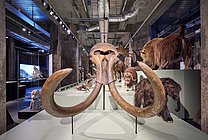
A journey into a world between cold and warmth, adaptation and extinction: with the special exhibition »About Life in the Ice Age«, the Ruhr Museum at the Zollverein UNESCO World Heritage Site becomes the venue for the first part of the Paläontologischen Landesausstellung Nordrhein Westfalens. Set against the impressive industrial backdrop of the former coal-washing plant, visitors are treated to a fascinating insight into the region’s geological history over the past 2.6 million years.
Over 350 exhibits – including spectacular original finds such as the mammoth skull from Haltern, life-size animal reconstructions and rare evidence of Ice Age flora – tell the story of life and survival in a time of dramatic climate change. Together with multimedia displays and impressive animations, the exhibition reveals how closely nature, climate and humanity are interwoven.
The exhibition deliberately builds a bridge to the present day: it shows how past environmental changes have shaped life and, at the same time, poses the pressing question of how humanity is dealing with climate change today. In doing so, »About Life in the Ice Age«combines scientific findings with a highly topical social issue.
Film: GUCC
On the initiative of the Ministerium für Heimat, Kommunales, Bau und Digitalisierung des Landes Nordrhein-Westfalen, the state is hosting its first ever Paläontologische Landesausstellung. From April 2026 to September 2027, it invites visitors on a unique journey through time and the history of the Earth: under the title »überLeben«, three exciting individual exhibitions in Essen, Münster and Detmold are interwoven across the three regions of Rhineland, Westphalia and Lippe. They demonstrate how life has changed over millions of years in North Rhine-Westphalia, whilst showcasing the state’s rich palaeontological collection. Each exhibition focuses on a different geological epoch. The central theme is always the life and survival of plants, animals and, later, humans. Spectacular fossil finds await visitors. Highlights include Germany’s largest carnivorous dinosaur – on display at the LWL-Museum für Naturkunde in Münster –, the Kervenheim whale – exhibited at the Lippisches Landesmuseum in Detmold – and the skull of the Haltern mammoth – on display at the Ruhr Museum in Essen.
Minister Ina Scharrenbach MdL: “Giants, traces, mysteries – palaeontology to marvel at and discover: a journey to the frontiers of our knowledge, to where science begins to make the past visible and uncover new mysteries. A journey into prehistory for all who wonder what our world was once like – and what it still tells us today.
For further information on the state exhibition, please visit:
www.landesausstellung.nrw
Film: GUCC
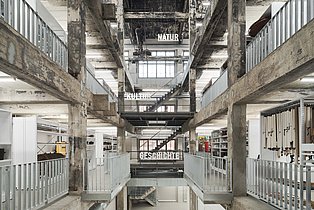
Set against the unique industrial backdrop of the coal-washing plant at the Zollverein UNESCO World Heritage Site, the Ruhr Museum’s new special exhibition, »About Life in the Ice Age«, explores the diverse habitats of the region during the Quaternary period and draws a connection to the impact humans have on the climate today. From 20 April 2026 to 10 January 2027, the exhibition in the spectacular coal bunkers on the 12-metre level will offer insights into life and survival in the Ice Age through over 350 fascinating exhibits and gripping animations.
Dietmar Osses, Deputy Director of the Ruhr Museum, explains: “The exhibition invites visitors to experience the fascinating world of the Ice Age in our region, with its surprising diversity and impressive transformations. It shows how plants, animals and humans adapted to extreme changes – and what questions this raises for the present and the future.”
The five chapters – Landscape, Flora, Fauna, People and Climate – framed by a prologue and epilogue, reveal the surprising diversity of the Ice Age, which has shaped the region over the past 2.6 million years with its various cold and warm periods:
Landscape
During the glacial periods of the Ice Age, the north of what is now North Rhine-Westphalia was covered by a sheet of ice over 100 metres thick. During the interglacial periods, the climate provided ideal conditions for the development of a diverse range of flora and fauna. The glaciers shaped the landscape as we know it today, whilst their meltwater carved out the river courses. Particles carried by the wind formed loess landscapes and fields of sand dunes, and erosion created extensive cave systems in the limestone. During the warm periods, extensive floodplain landscapes and moors developed along the Rhine, Lippe and Ems. The exhibition draws on popular images of the Ice Age and contrasts them with scientifically accurate reconstructions and impressive animations of Ice Age landscapes during the glacial and interglacial periods.
Flora and fauna
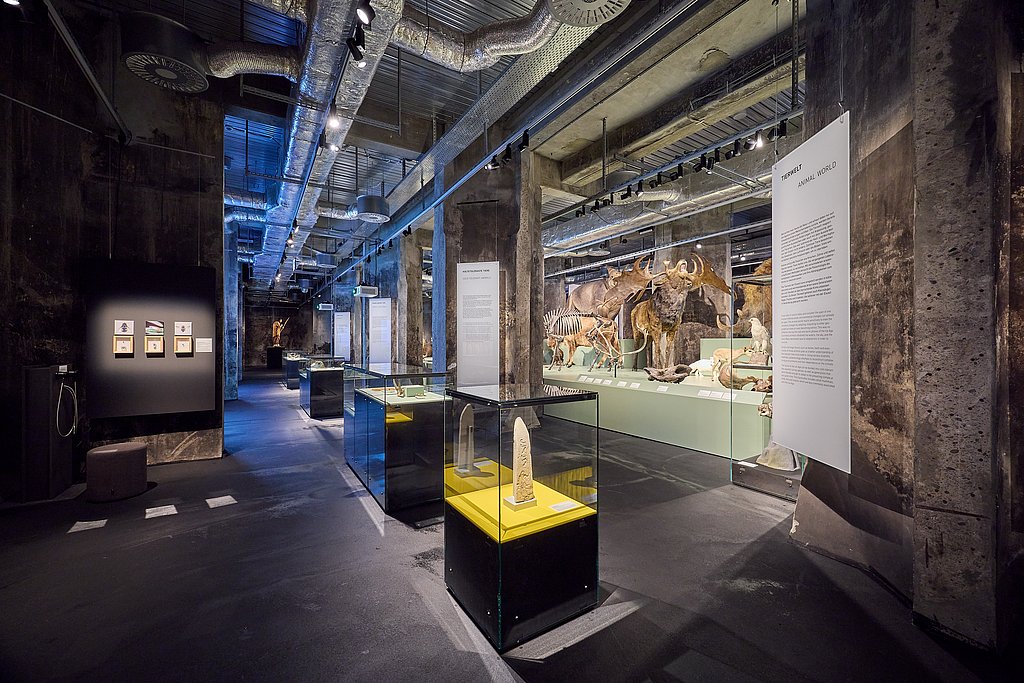
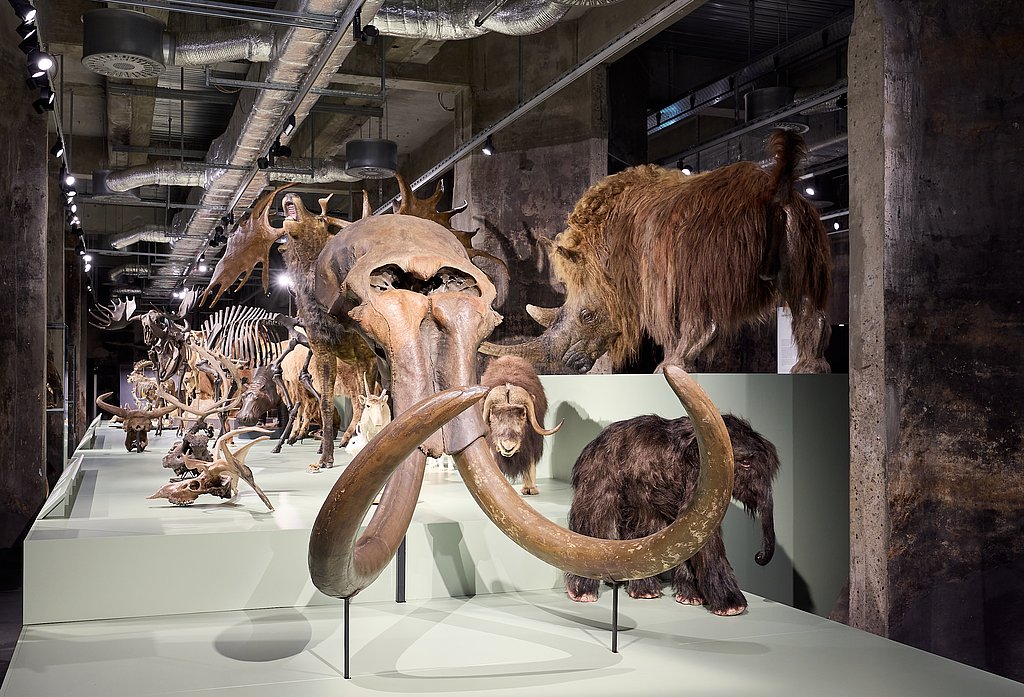
At the heart of the exhibition is an impressive parade of Ice Age animals. Original bone finds, complete skeletons, lifelike dermoplastics and models illustrate the diversity of these animals and how they adapted to the climate. Here, the fur-clad woolly rhinoceros and the mammoth meet the heat-loving forest rhinoceros and the hippopotamus, whilst the giant deer encounters the cavehyena. During the Ice Age, changing climatic conditions fundamentally altered the habitats of plants and animals. Adapting or migrating to other regions were ways of ensuring the survival of species. However, many species became extinct.
The exhibition features original, microscopic Ice Age pollen grains that bear witness to the region’s Ice Age flora, as well as the massive root and impressive trunk of a twelve-thousand-year-old pine tree.
People and the Climate
People have lived along the Rhine and Ruhr for 350,000 years. By using tools, making clothing and developing cultural techniques, they were able to adapt to changing climatic conditions. Homo heidelbergensis and Neanderthals became extinct, whilst anatomically modern humans were the only human species to survive. Scientific research into the Ice Age has been ongoing for around 200 years. Current findings clearly show how the climate has changed cyclically over 2.6 million years and that the current climate change, with significantly rising temperatures, is man-made.

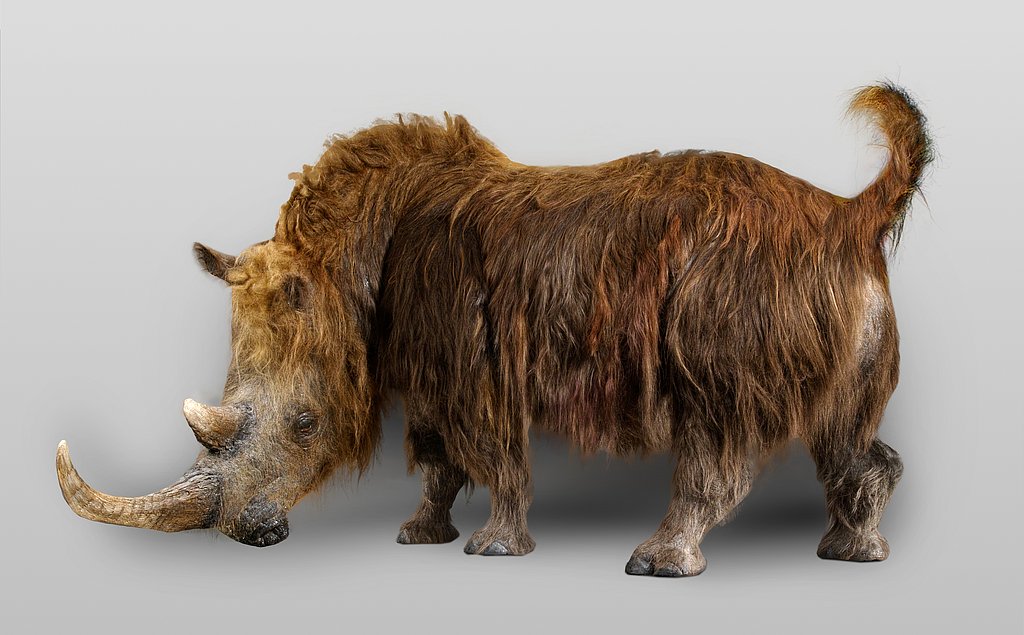
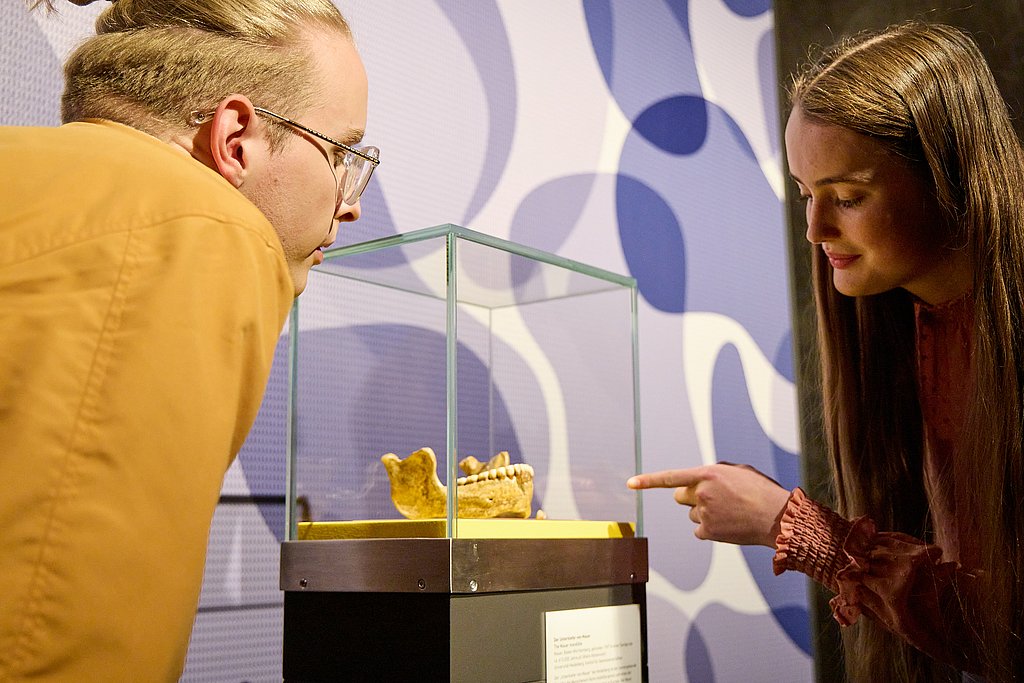
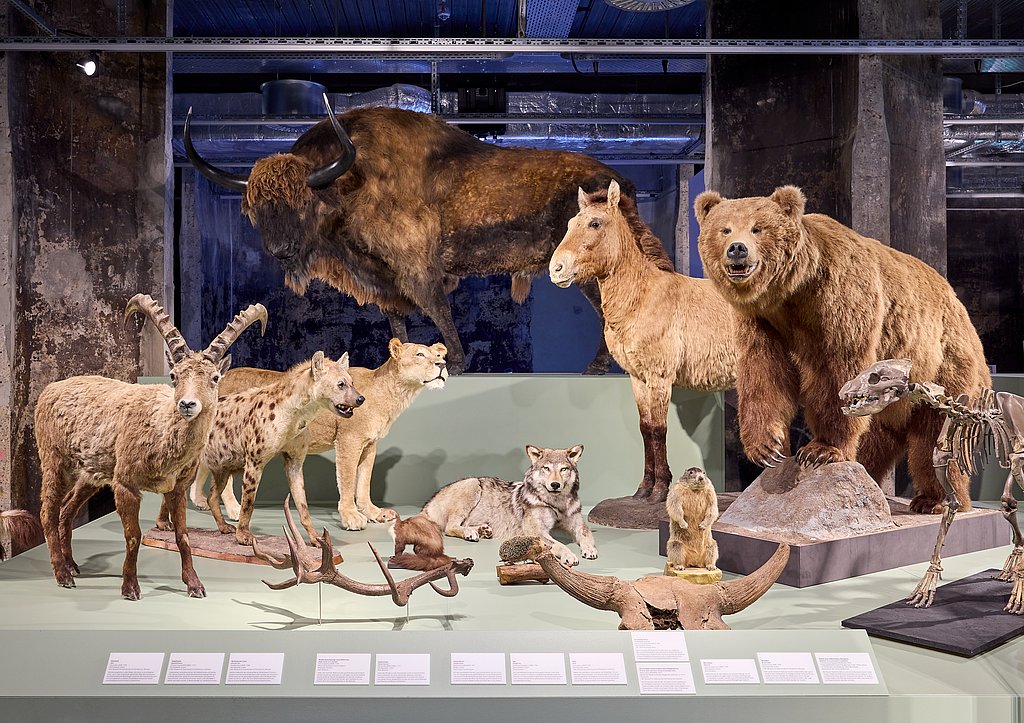

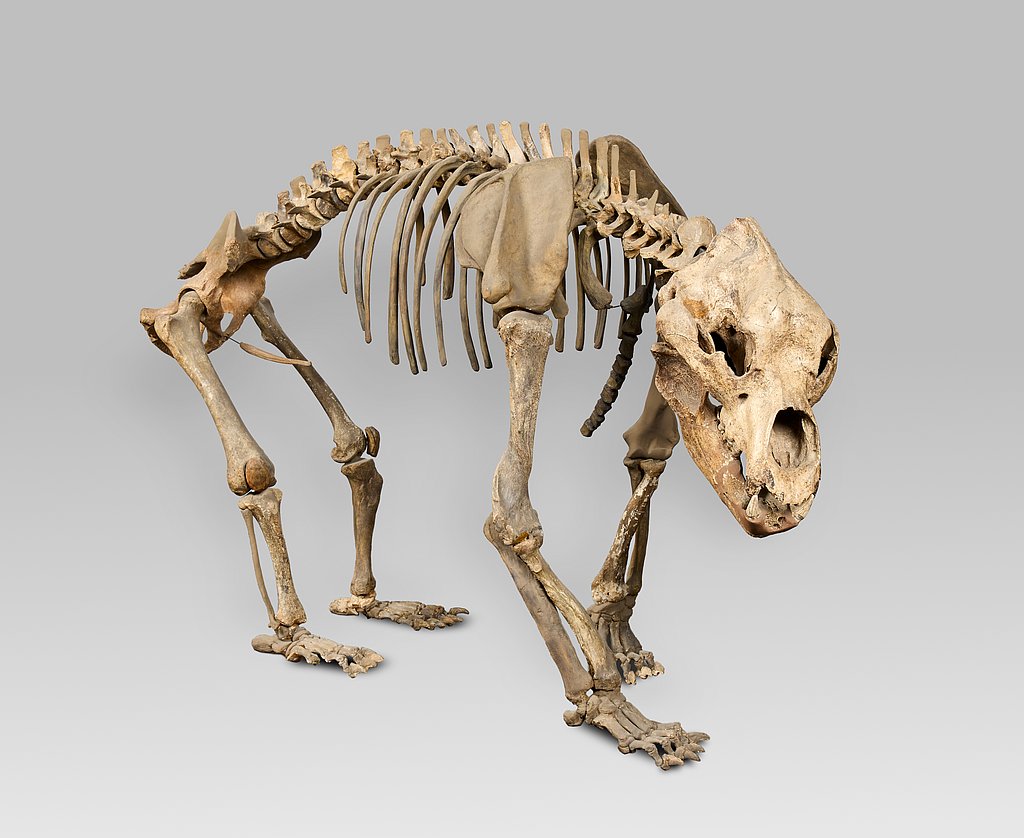
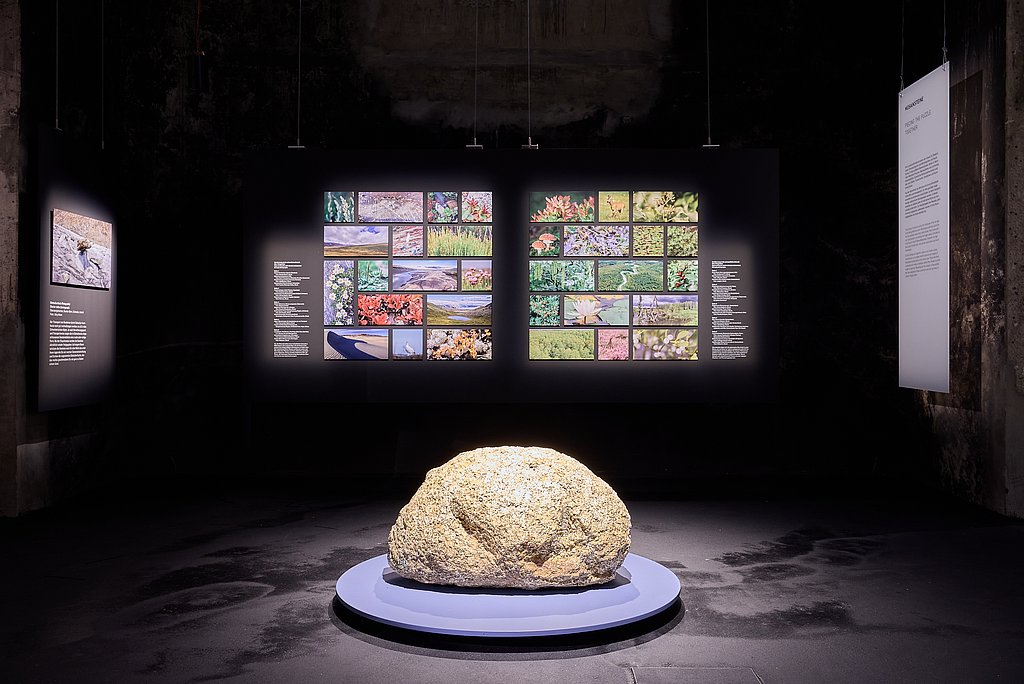
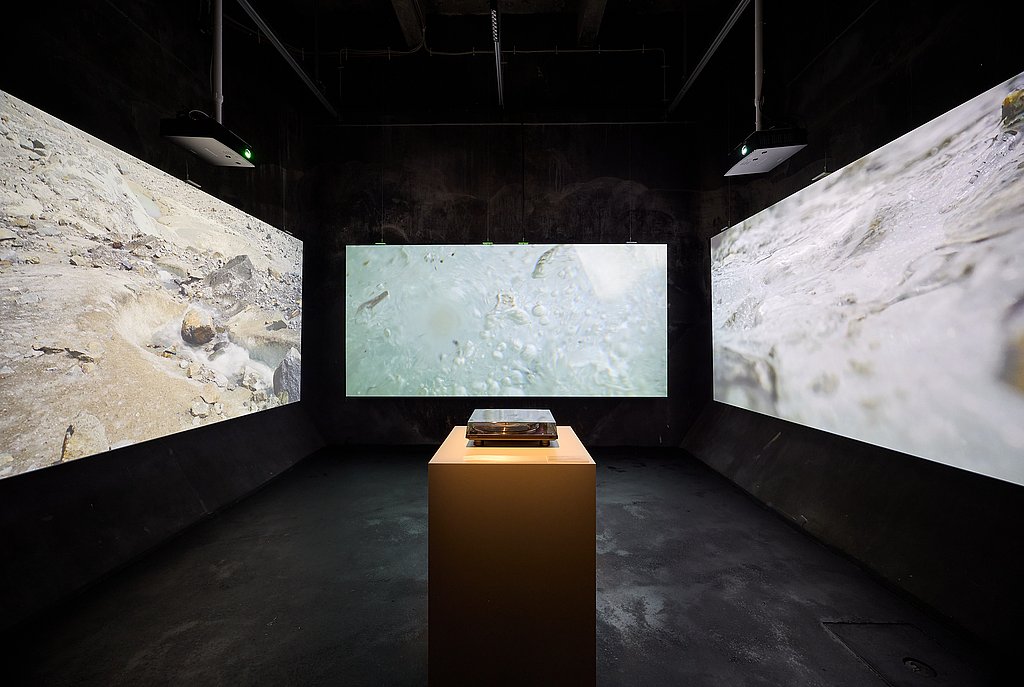


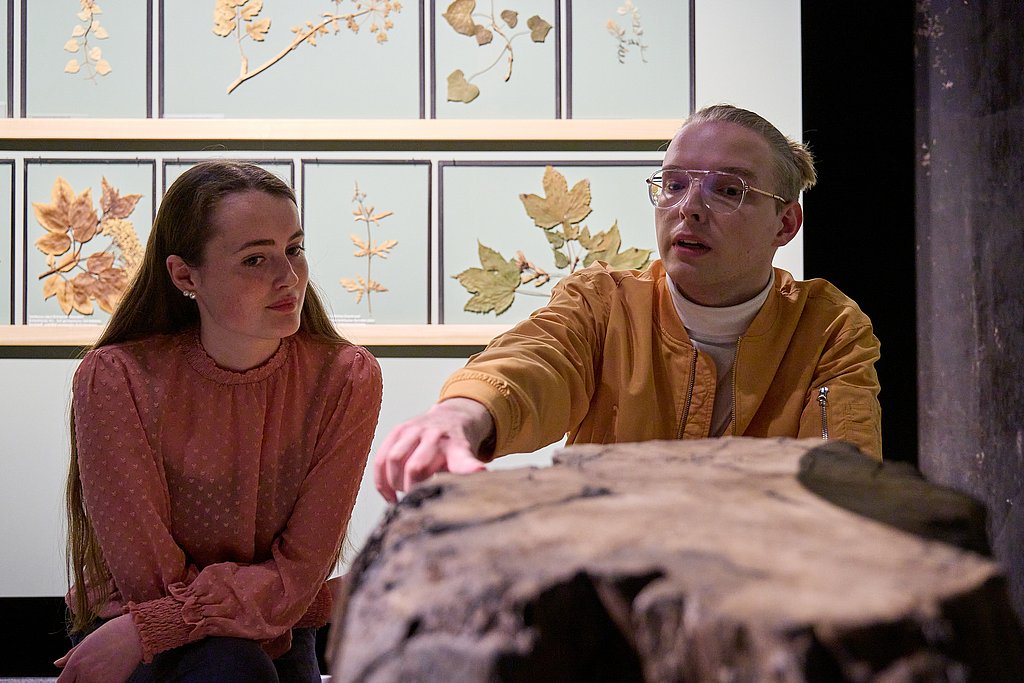
2.6 million years of Ice Age life and landscape formation have left a wide variety of traces in North Rhine-Westphalia. The exhibition features representative items on loan from the collections of several universities and museums, as well as from the archaeological heritage departments of the regional associations, the Geological Survey and private individuals in North Rhine-Westphalia. It is further enriched by objects from institutions and private individuals in other federal states and from abroad.
In addition to fossils, rocks and artefacts, the exhibition also features models, audio, image and video formats, books, educational displays and works of art. For the first time, the Ruhr Museum is also presenting scientifically accurate landscape animations of the Ruhr Valley during an Ice Age cold phase and a warm phase.
The scale of these objects ranges from microscopically small plant remains to spectacular skeletons and life-size reconstructions of Ice Age wildlife, measuring several metres in size. Highly magnified SEM images of Ice Age pollen offer a glimpse into the timeless beauty of the microscopic plant world, from which entire habitats can be reconstructed.
Right at the start of the impressive parade of Ice Age animals, visitors come across one of the exhibition’s highlights – the Haltern mammoth skull. The skull, which was discovered in 1975 during construction work in the Münsterland region, is one of the best-preserved mammoth skulls in Europe.
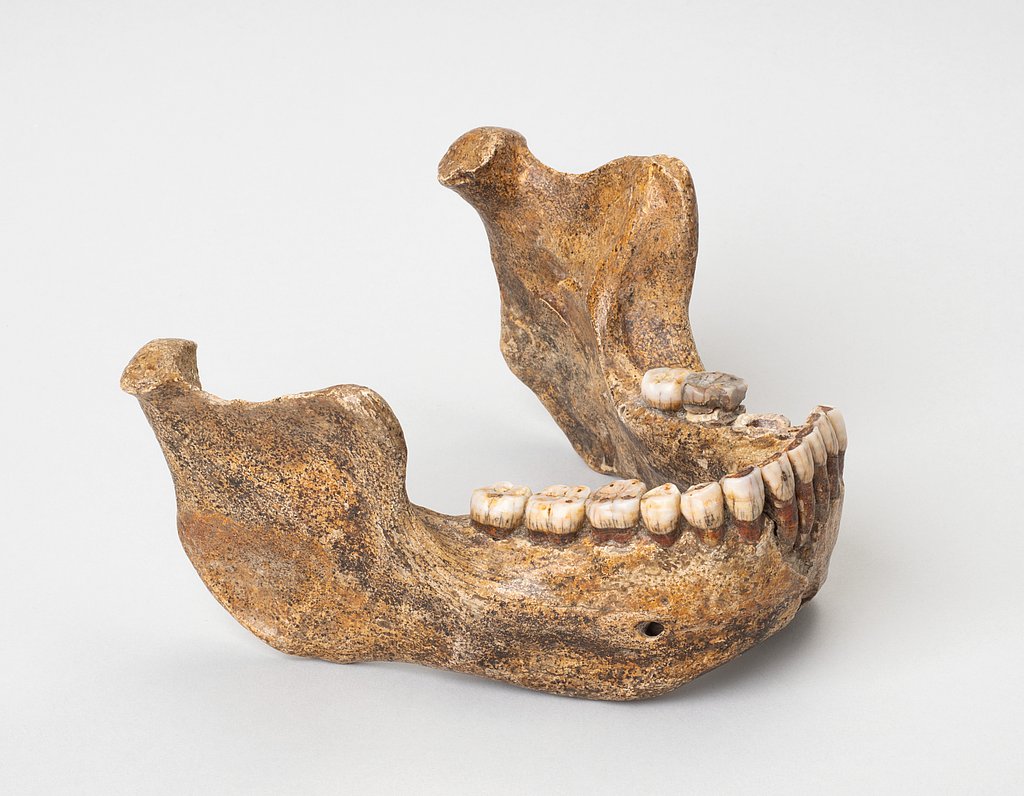
Another »mammoth artefact« comes from the Balve Cave, one of North Rhine-Westphalia’s most important Ice Age archives. In the 1930s, researchers came across the remains of an extraordinary find: the badly crushed tusk of a male woolly mammoth. To this day, it remains one of the largest known mammoth tusks. The famous lower jaw from Mauer near Heidelberg is regarded worldwide as one of the most important finds of a fossil human species. The entire species Homo heidelbergensis was named after its discovery site near Heidelberg.
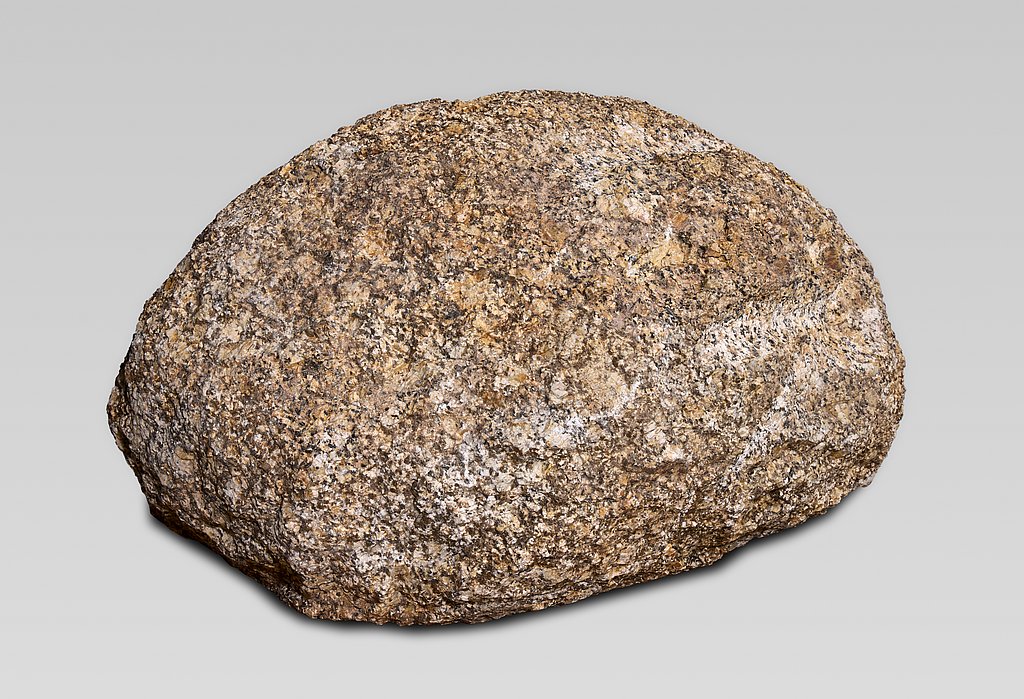
By far the oldest artefact in the North Rhine-Westphalia State Palaeontological Exhibition is a granite boulder over a billion years old, which was transported 200,000 years ago by an inland ice sheet from Finland to what is now the Ruhr region.
The geologically youngest object is a preserved ice crystal from the central Arctic, which was recovered in 2019 during the international MOSAIC expedition.
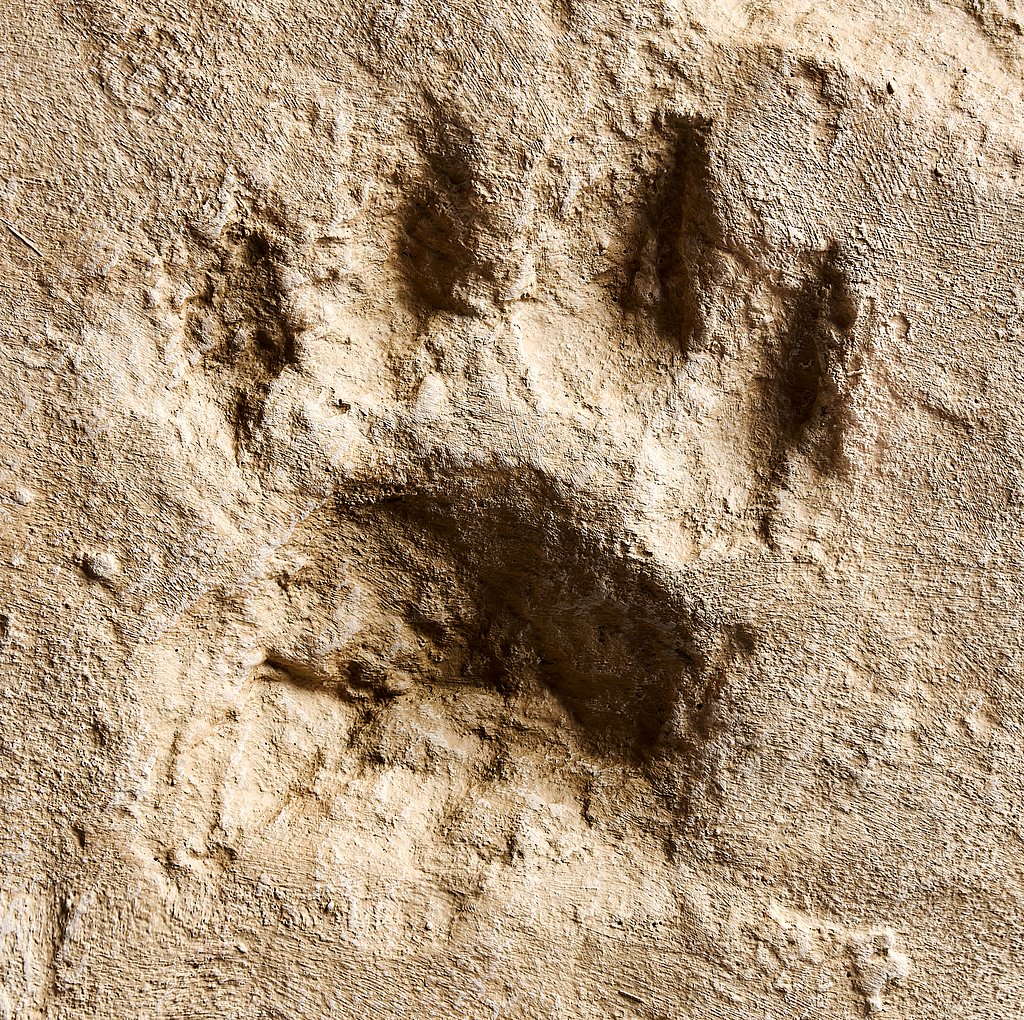
The Ice Age animal tracks from Bottrop are regarded as particularly spectacular finds of world-class significance. The exhibition presents a section of the impressive, approximately 150-square-metre Bottrop track slab in digital form, on which over 600 footprints dating back some 40,000 years have been identified.
The fact that Caspar David Friedrich also captured the »Little Ice Age« is demonstrated by the enlarged reproduction of his 1818 painting »Woman before the Setting Sun«. From a scientific perspective, the distinctive play of light in the work could depict the consequences of the eruption of Mount Tambora.
The exhibition area on human impact on the climate is brought to a close by the nearly four-metre-long casing of a Cold War-era nuclear weapon. It symbolises humanity’s ability to trigger a global nuclear war at the touch of a button, resulting in a nuclear winter and a new ice age.
Impressive exhibits from the industrial age and the multimedia documentary installation »Crying Glacier« on the melting of Alpine glaciers provide space for reflection and participation: how do we humans ensure our survival on this planet?
The exhibition on the 12-metre level of the coal washing plant uses the striking bunker walls as a striking backdrop. At the centre is a parade of Ice Age animals over twenty metres long, featuring skeletons and reconstructions from various climate zones. The skeletons are in the foreground, with the reconstructed forms of the animals behind them. This creates an ‘X-ray view’ that reveals the structures of life. Shifting viewing angles create a compelling experience that oscillates between proximity and distance.
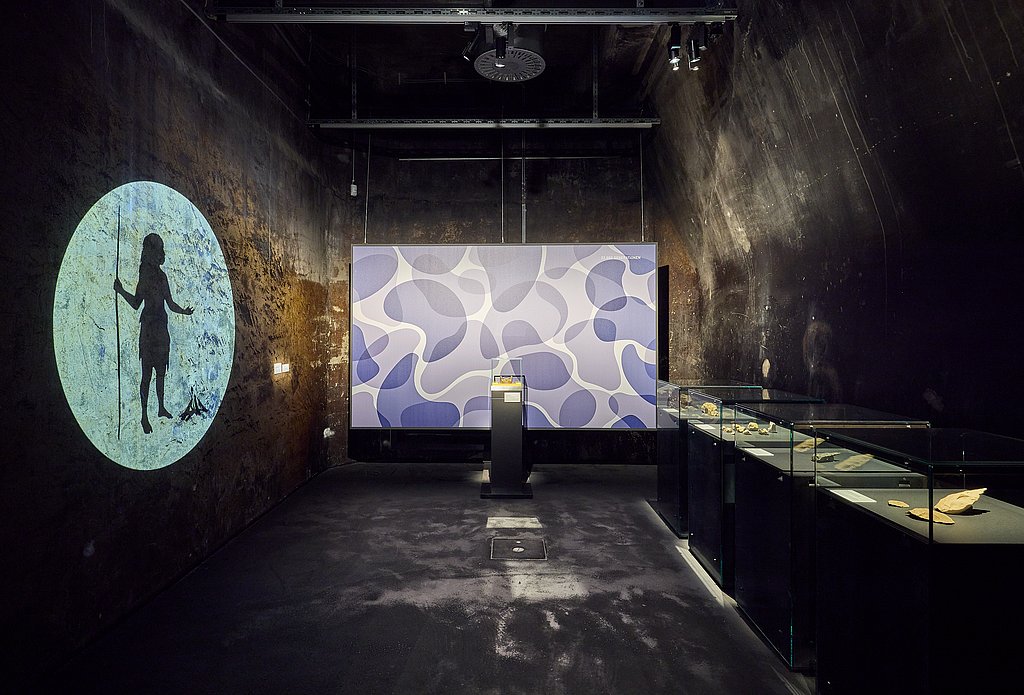
In the spirit of a ‘web of life’, plants, animals and humans are presented as equals. A minimalist design in dark tones brings the exhibits into focus, whilst targeted colour and lighting accents highlight specific stations, such as the guest exhibits not originating from North Rhine-Westphalia and the hands-on stations.
Sustainability is an integral part of the exhibition concept: numerous elements, such as display cases, back panels and media technology, come from the Ruhr Museum’s existing stock and have been reused in a resource-efficient manner. In this way, the design combines the exhibition’s message with a responsible approach to materials.
Projections and animations broaden the perspectives, whilst the »Palaeo Lounge« invites visitors to reflect. The result is an experiential space that effectively combines science, architecture and atmosphere.
Dr Ulrich Hermanns’ exhibition company Medien Transfer GmbH from Münster is responsible for the exhibition architecture and construction.
An extensive programme of events accompanies the special exhibition. It is aimed at children, adults, families, senior citizens, people with and without disabilities, school pupils and students, teachers, school groups and other groups. Alongside various guided tours, workshops and excursions, fascinating talks, panel discussions and readings reveal the secrets of the Ice Age. An overnight stay at the museum, agames day, a summer festival and a science slam round off the programme.
The Ruhr Museum’s free audio guide app takes you to 25 highlight objects in the exhibition and, in around 60 minutes, shares exciting stories, background information and surprising perspectives.
All events can be found in the programme booklet and at
www.ruhrmuseum.de/eiszeitprogramm
Dinosaurs, ancient whales and mammoths – different periods of Earth’s history across three museums:
Surviving the Ice Age – Ruhr Museum, Essen(20 April 2026 – 10 January 2027)
Survival – Home of the Whales: The Primeval Sea – Lippisches Landesmuseum, Detmold(26 September 2026 – 4 April 2027)
Survival between Dinosaurs and Scaly Trees – LWL-Museum für Naturkunde Münster (9 July 2026 – 5 September 2027)
Together with the curious alien Gidluk, the journey – whether in the museum or from the comfort of your own home – takes you through some of the most fascinating ecosystems that have ever existed in North Rhine-Westphalia.
The tours invite you to solve creative and exciting tasks and discover the world of palaeontology in a completely new way. Through play, you can experience how life emerges, constantly changes, adapts and survives.
1 hour, in German and English
www.ruhrmuseum.de/kuldig
168 pages, with over 130 illustrations
Isensee Verlag, Oldenburg 2026
Price: €20
ISBN 978-3-7308-2264-7
Further information about the exhibition and the extensive supporting programme is available here as PDF files for download:
The exhibition is accompanied by an extensive programme of events. You can find guided tours and other activities in our calendar:

Share